

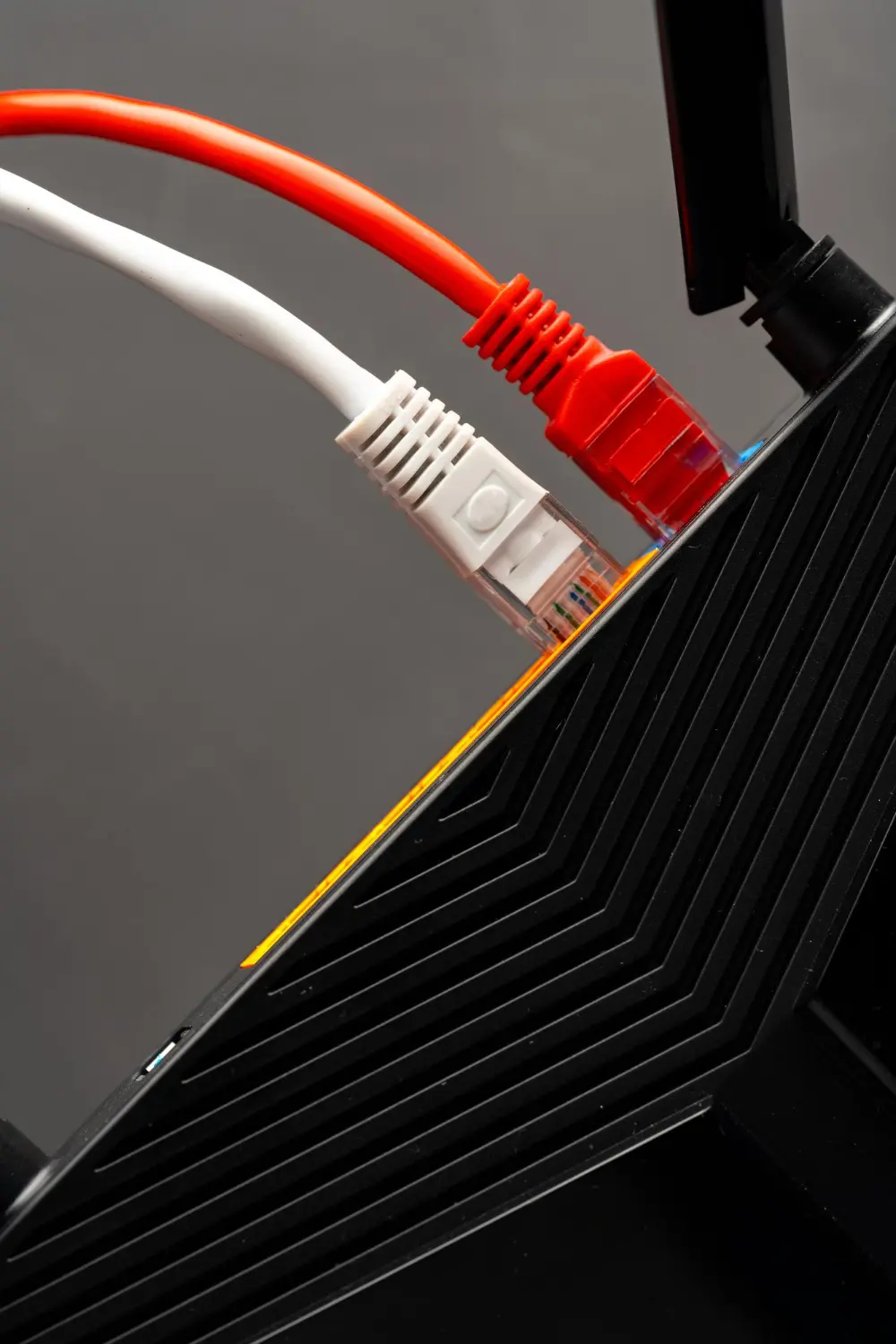
A CAT6 patch cord is a pre-terminated Ethernet cable fitted with connectors at both ends. It is used to connect network devices to one another or to structured cabling outlets.
Unlike the longer networking cables installed through walls, ceilings and conduits, patch cords are generally used for shorter, accessible connections. Their flexibility and ready-to-use connectors make them convenient for equipment that may need to be connected, disconnected or rearranged.
A CAT6 patch cord typically uses RJ45 connectors and is designed for Category 6 networking applications.
Common connections include:
In a structured cabling installation, patch cords connect the permanent cabling infrastructure to active networking equipment and end-user devices.
A CAT6 patch cord carries Ethernet signals between connected network devices. It forms part of the complete network channel rather than functioning as an independent network installation.
For example, in an office network, a permanent cable may run from a workstation outlet to a patch panel in the network rack. A CAT6 patch cord then connects the patch panel to a network switch. Another patch cord can connect the workstation to its network outlet.
This arrangement makes it easier to manage connections without disturbing the permanent cabling.
A typical structured network connection includes:
Each component contributes to the overall performance of the network. A patch cord should therefore be compatible with the category and requirements of the rest of the installation.
Although both are used for Ethernet connectivity, a CAT6 patch cord and a standard CAT6 cable serve different purposes.
A standard CAT6 cable is commonly used for permanent network installations. It runs through conduits, cable trays, walls and ceilings to establish connections between network outlets and equipment locations.
A patch cord is designed for accessible connections between the installed cabling and network devices.
The main differences include:
Purpose: Standard CAT6 cable establishes the permanent network infrastructure, while a patch cord connects devices to that infrastructure.
Termination: Standard cable is generally installed and terminated as part of the structured cabling system. A patch cord comes with connectors already fitted at both ends.
Flexibility: Patch cords are designed for convenient equipment connections and handling. Permanent installation cables are selected for fixed routing through the building.
Typical applications: Standard CAT6 cable is used for horizontal cabling, while patch cords are commonly used between patch panels, switches, routers, computers and other network equipment.
Using the appropriate cable for each part of the installation helps maintain a structured and manageable network.
CAT6 patch cords are used wherever network devices need to be connected through an Ethernet connection. Their applications extend across commercial, institutional, industrial and residential environments.
Network racks contain switches, patch panels, routers, servers and other networking equipment. Patch cords connect these components and help establish communication between different devices.
In larger installations, selecting suitable cable lengths and organising connections properly can make equipment easier to identify, maintain and troubleshoot.
For installations requiring dedicated equipment housing, network racks and enclosures provide structured mounting for networking components.
Offices use patch cords to connect computers, printers, IP phones, routers and wireless access points to their network infrastructure.
They are particularly useful in workplaces where employees, desks and equipment may be rearranged over time.
IP surveillance systems use network connections to transfer video data between cameras, switches and recording equipment.
CAT6 patch cords can be used for short Ethernet connections between compatible devices, such as an NVR and network switch or a camera and a nearby network outlet.
For CCTV installations, the main cable route and the environment in which the cable is installed should be considered separately from the short patch connections.
Factories and industrial facilities use network infrastructure to connect monitoring systems, computers, switches, control equipment and other devices.
Patch cords can be used for connections within protected equipment areas and network cabinets. However, installations exposed to moisture, dust, mechanical damage or electrical interference require suitable cable and connector specifications for those conditions.
Schools, colleges, hospitals and other institutions often have multiple network-connected devices distributed across different rooms and departments.
Patch cords help connect these devices to the building's structured cabling system and make network changes easier to manage.
Selecting a CAT6 patch cord should involve more than choosing a cable that fits the connector. The right product should match the installation requirements and the equipment being connected.
Ensure that the patch cord is suitable for the Category 6 network infrastructure.
Using a cable with a lower category rating in a higher-category installation can limit the performance of the complete connection. The patch cord, permanent cable, connectors and connected equipment should be considered together.
Cable length is one of the most important considerations, particularly inside network racks.
A patch cord that is too short can place unnecessary strain on connectors and ports. An excessively long cable can create clutter, make connections difficult to trace and obstruct access to equipment.
Choose a length that comfortably reaches the connected devices while allowing neat routing.
Elixir's CAT6 Patch Cord is listed in multiple length options, including 0.25 m, 0.5 m, 1 m, 3 m and 5 m. This allows users to select a suitable option based on their connection requirements.
The connector should match the ports available on the connected networking equipment.
Elixir's CAT6 Patch Cord is listed with RJ45 connectors, making connector compatibility an important consideration when selecting it for a network installation.
Always verify the equipment interface before purchasing.
The conductor material plays an important role in network cable performance.
When purchasing a patch cord, check the manufacturer's specifications for conductor material, wire gauge, cable construction and category rating.
Elixir's CAT6 Patch Cord product information specifies 26 AWG, four pairs, RJ45 connectors and pure copper construction.
These details help buyers evaluate whether the product matches the requirements of their network setup.
A patch cord used inside a protected office network rack may have different requirements from a connection used in an industrial or outdoor environment.
Consider factors such as:
For exposed outdoor network routes, a standard indoor patch cord should not be treated as a substitute for a cable designed for outdoor installation. Select products according to the actual environmental requirements.
A well-designed network installation should allow technicians to identify, access and maintain connections without unnecessary difficulty.
Avoid leaving excessive cable slack inside network racks. Route patch cords neatly and ensure they do not obstruct ventilation or access to equipment.
Accessories such as network cable managers and rack accessories can help maintain organised cable routing within network enclosures.
Network racks often contain several switches, patch panels and other devices with multiple connections. Using inappropriate patch cord lengths can make the installation difficult to manage.
For example, using long patch cords for devices mounted next to each other can create unnecessary loops and make individual connections harder to trace.
A more organised installation considers:
Selecting appropriate lengths helps reduce cable congestion and makes future network changes easier.
Even a small component can affect the usability and reliability of a network installation. The following mistakes are worth avoiding:
Choosing the wrong cable category: A patch cord should be compatible with the existing network infrastructure.
Ignoring cable length: Excessively long or short patch cords can create routing and maintenance problems.
Overlooking connector compatibility: Always check whether the connector type matches the equipment ports.
Using indoor patch cords in exposed environments: Outdoor and industrial installations may require additional environmental protection.
Ignoring cable management: Unorganised connections can make troubleshooting and equipment maintenance more difficult.
Purchasing without checking specifications: Verify conductor material, wire gauge, connector type and other relevant product details before ordering.
A structured network depends on the quality and compatibility of its individual components. While permanent CAT6 cabling establishes the foundation of the network, patch cords connect that infrastructure to the devices that use it.
For offices, server rooms, CCTV systems and industrial installations, the right patch cord should offer suitable category compatibility, connector configuration, length and construction.
Elixir Racks offers networking solutions across its CAT6 cable range, including indoor, outdoor, flat and patch cord options. Its CAT6 Patch Cord is specified with 26 AWG, four pairs, RJ45 connectors and pure copper construction, with multiple length options.
Businesses planning a new network installation or upgrading existing connectivity can explore Elixir's CAT6 cable range to identify products suited to their requirements.
A CAT6 patch cord connects network devices such as switches, routers, patch panels, computers, servers and compatible IP surveillance equipment. It is commonly used for short Ethernet connections within structured cabling systems.
A standard CAT6 cable is generally used for permanent network installations through walls, ceilings and cable pathways. A CAT6 patch cord is a pre-terminated cable used to connect network equipment to outlets, patch panels or other devices.
CAT6 patch cords commonly use RJ45 connectors at both ends. However, connector compatibility should always be checked against the ports on the connected equipment.
The correct length depends on the distance between the connected devices and the cable routing path. Shorter lengths are generally suitable for connections within the same network rack, while longer options may be needed for equipment positioned farther apart.
Yes. CAT6 patch cords can be used for short Ethernet connections between compatible IP cameras, network switches, NVRs and other network equipment. The main cable installation must also be suitable for the environment and network requirements.
A CAT6 patch cord can generally connect to compatible CAT5e equipment and cabling. However, the complete network channel will operate according to the capabilities and limitations of its components, rather than the patch cord's category rating alone.
CAT6 patch cords can be used in Power over Ethernet installations when the cable, connectors and complete channel are suitable for the PoE standard and power requirements of the connected devices. Always verify the product specifications and equipment compatibility.
Check the category rating, conductor material, wire gauge, connector type, cable length and suitability for the installation environment. These specifications help ensure that the patch cord is appropriate for the intended network connection.

As a member of Debut House, you’ll get access to a large variety of resources and networking opportunities.
Suspendisse varius enim in eros elemen tum tristique. Duis cursus, mi quis vive rra ornare, eros dolor interdum nulla.
Debut House members have access to engage with their industry's top pros and sharpen their creative skills.
Debut House members have access to engage with their industry's top pros and sharpen their creative skills.
Debut House members have access to engage with their industry's top pros and sharpen their creative skills.

"I had ordered several DVR Racks from Elixir Network. They offer top-quality racks in the industry. I highly recommend it to everyone. I would recommend using Elixir racks."

"Elixir Network offers a dependable range of racks and networking infrastructure products. The products are well-finished and suited to professional installations, making them a reliable choice for our requirements."
“We have been impressed with the overall quality of Elixir Network’s products. The racks are sturdy, well-finished and practical for professional installations, while the support team has been responsive throughout.”
“Working with Elixir Network has been a smooth experience from product selection to delivery. Their racks are well-built, professionally finished and suited perfectly to our infrastructure requirements.”
“Elixir Network has a good range of networking racks and enclosures for different applications. The product quality and finishing have been consistently reliable, making them a dependable choice for our projects.”
Elixir Network is an ISO 9001:2015-certified manufacturer of racks, enclosures, networking cables and infrastructure solutions, backed by 30+ years of manufacturing excellence. With in-house fabrication, coating and quality control, we deliver reliable and customised solutions for IT, networking, surveillance and telecom applications.
ISO CERTIFIED